As I was digging a plot of land this spring for planting, I turned up a large heavy-duty cable looped and both ends. It was about six feet long, made from ½” steel wire rope and had two clamps on each end with a metal thimble protecting the loop. It was quite rusty but I had no doubt what it was for. I remembered it even thought it had been buried for over sixty years. That is one of the advantages of still living on the farm one was born on. The mere sight of an item can rekindle a memory long thought forgotten. And this cable was a connecting link to times in the early 1960’s.
It was a cable that my dad made for pulling things with his Caterpillar. I still have the heavy duty vise my dad used to secure the clamps to the cable when it was made in his shop. It probably slipped off the dozer when he was operating it. And laid in the soil until I unearthed it sixty years later.
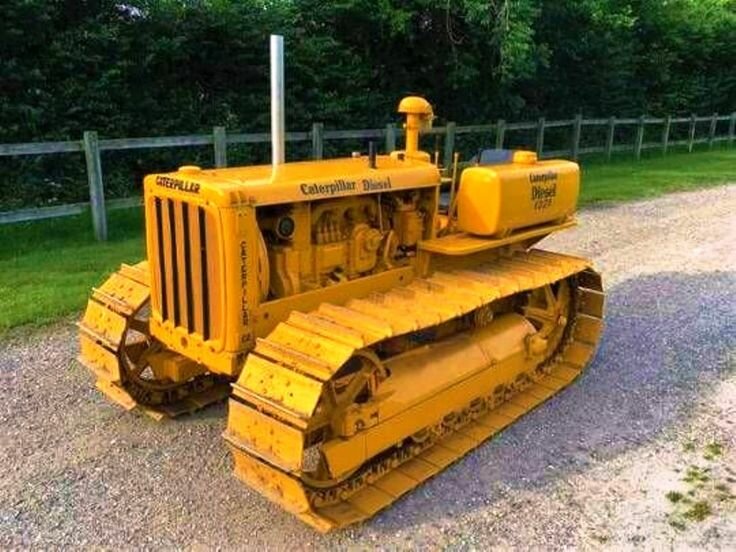
As a kid I lived and breathed anything that took place on the farm. Equipment held a sacred place in my mind. It was the backbone of the farm. Enabled a mere man to perform tasks impossible to a human on their own. That was the D2 Caterpillar. A marvel of machinery in my mind. My young mind absorbed all the information my dad related to me about the attributes of this wonderful crawler. I can still feel what that black seat felt like and see the steering levers and hear the pony motor fire to life when he pulled the rope which had to be wound around the engine pully.
The Caterpillar D2 was built from 1938 until 1957. It was the smallest tracked tractor the company built. A 33 horsepower, four-cylinder diesel engine, with five forward speeds and one reverse gear. It had a gasoline pony motor to start it. Weighing in at 8,000 pounds with 12” wide tracks it could outpull a tractor. Many of these were sold for farming applications and my dad used it to pull a three bottom molboard plow.
He also had a blade mounted on the dozer and used it to move lots of dirt around the farm. There is still an earthen dam he built to catch runoff from the barnyard. It has long since filled in with silt but I recall who built it every time I see the square plateau that did what the designer built it for many years ago. He widened out the cartway which gave us access down the limestone bluff at the backside of the farm.
My neighbor told me one time that he was helping his dad take down a silo by their barn on a Sunday morning. A common way of removing a concrete stave silo is to break out the staves at the bottom of the silo on the side you want it to fall. When enough staves are gone it should fall in that direction. In their case it fell in the wrong way and blocked the entrance of the barn so the dairy cows couldn’t get back in. He was only fifteen years old but he had worked for my dad and grandfather, and knew how to run the dozer. My dad was gone that day, and over the protestation of his father, he started the Caterpillar and brought it over to move the concrete debris away from the barn and save the day.
This column is written by Messenger editor and Minnesota native Terry Campbell. Here he relates his adventures and recollections including relocating to the state of Tennessee after he turned sixty years old.